
Summary
Are we on the verge of an era in which robots replace security system installers?
For years, the security industry has debated whether robots will replace security guards. But could they also replace the technicians who physically install security systems? This question builds on earlier predictions about robotic installation.
Although robotics will continue to advance and the range of assistive tools will expand, fully replacing human installers with autonomous robots within five to seven and a half years remains a significant technical challenge. The main obstacles involve dexterity, mobility, and the ability to comply with building regulations and safety requirements.
At the Securing New Ground conference, three industry executives predicted that robots could take over physical installation work within this relatively short timeframe. However, working in unpredictable commercial environments is far more complex than automating software development and operational processes.
The ten-year outlook
Forecasting technological developments over a ten-year period requires caution from both advocates and sceptics. Ten years ago, Verkada did not yet exist, while the prevailing industry view was that Hikvision was poised to dominate the global market. Over the following decade, both expectations proved inaccurate.
Technological progress rarely follows a linear path, and robotics is highly likely to undergo significant mechanical and algorithmic improvements by the mid-2030s.
Five, seven and a half, or even four years?
The latest predictions emerged during the Security Megatrends panel at the Security Industry Association's (SIA) Securing New Ground conference in New York.
The session was moderated by Steve Van Till, founder and CEO of Brivo. At the conclusion of the panel, he asked participants to give a specific estimate of when robots would be able to install security systems physically and independently.
- Eric Dean, Chief Technology Officer at national systems integrator M.C. Dean, predicted rapid progress: Yes, probably five years.
- Alex Rohweder, Senior Vice President and Head of Building Security at Siemens, suggested a slightly longer timeframe: Maybe seven and a half years.
- Earlier this year, Van Till had suggested that robots could perform physical tasks in the industry within five to ten years. During the panel, he expressed an even more optimistic view: I would have said four years.
This enthusiasm has a clear commercial rationale. Manufacturers and large engineering firms face substantial costs associated with field labour. Technician qualifications, equipment installation, and site visits account for a significant share of project expenses.
However, defending the practical expertise of systems integrators against overly optimistic claims about software capabilities, Eric Yunag, Executive Vice President at Convergint, highlighted an important distinction:
If I gave any one of you in this room a laptop and asked you to use AI to build a VMS, or video management system, there is a good chance you could put together something terrible but functional in 30 minutes. However, if I gave that same person a box of access control components and asked them to install access control on a single door at the back of this room and integrate it with the building's systems, it would take considerably longer than 30 minutes.
Three major obstacles to sutonomous installation
For robots to install security systems entirely on their own, they must overcome three increasingly complex challenges.
1. Safe navigation in different environments
General-purpose humanoid robots must be able to maintain their balance autonomously and move safely through unstructured environments where movement paths are not predetermined and conditions can change unexpectedly.
2. Cost competitiveness
The total costs of purchasing, operating, maintaining, and repairing robots must fall below the fully loaded cost of employing human technicians.
3. Complex physical tasks and regulatory compliance
This is the most significant obstacle. Unlike factory assembly lines, where working conditions and processes are tightly controlled, commercial installation sites require technicians to handle a wide range of unpredictable tasks.
They must work on extension ladders, navigate ceiling voids, pull cables through congested wall conduits, drill into metal structures, and connect delicate eight-pin connectors in awkward positions.
In many locations, including telecommunications rooms, basements, and lift shafts, cellular connectivity may be unavailable. This creates additional challenges for robots that rely on cloud-based guidance and instructions.
The difficulty becomes even more apparent when these tasks are compared with autonomous security patrols. Mechanically, patrolling a level corridor or a corporate lobby is much simpler than pulling cables. Yet autonomous patrol robots have also struggled to achieve widespread commercial adoption over more than a decade of development.
Several prominent patrol robotics vendors failed to gain sufficient market traction and subsequently acquired traditional security guarding businesses to sustain their operations. Meanwhile, Everon undertook a strategic reassessment of its EvoGuard robotics line after deploying fewer than twelve robotic units.
Assistive tools rather than full human replacement
In the near term, a more realistic scenario is the development of robotic assistive tools and AI-guided workflows rather than the complete replacement of technicians with autonomous robots. For example, semi-automated devices designed for overhead drilling or cable pulling could reduce fatigue caused by repetitive physical work.
AI-powered wearable devices could also support less experienced technicians by providing real-time guidance and helping verify wiring connections.
Furthermore, if general-purpose humanoid robots were capable of independently installing access control hardware in compliance with life-safety requirements within five to seven years, they would need highly advanced visual perception, precise fine-motor control, dynamic balance, and the ability to make sound mechanical decisions.
Such capabilities would mean that robots could also perform most other maintenance and installation trades across the global economy. In that scenario, security system installation would represent only a small part of much broader societal change.
The future of security installation and robotics
Over the next decade, robotics will continue to advance, reducing technicians' day-to-day physical workload and improving productivity on installation sites.
However, according to IPVM, predicting that autonomous humanoid robots will completely replace skilled installation teams within five to seven and a half years rests on a flawed assumption: that the rapid pace of software development can be directly equated with the automation of physical work.
In practice, low-voltage system installation remains a complex physical discipline. Its automation is constrained by unpredictable environments, technical requirements, and the need to make context-specific decisions.
Over the next decade, robotics will continue to advance, reducing technicians' day-to-day physical workload and improving productivity on installation sites.
However, according to IPVM, predicting that autonomous humanoid robots will completely replace skilled installation teams within five to seven and a half years rests on a flawed assumption: that the rapid pace of software development can be directly equated with the automation of physical work.
In practice, low-voltage system installation remains a complex physical discipline. Its automation is constrained by unpredictable environments, technical requirements, and the need to make context-specific decisions.
Additional perspective from a security technology distributor
Key takeaway: In the near term, automation is more likely to change installers' work than replace them entirely
The central argument in the IPVM article is sound: the ability to develop sophisticated software does not automatically translate into the ability to perform complex physical tasks independently.
However, from a security technology distributor's perspective, this discussion has another dimension. The changes will not be limited to installation itself. They will also affect how security systems are selected, designed, supplied, configured, and maintained.
1. What will change first?
1. System configuration and diagnostics
Higher automation potential
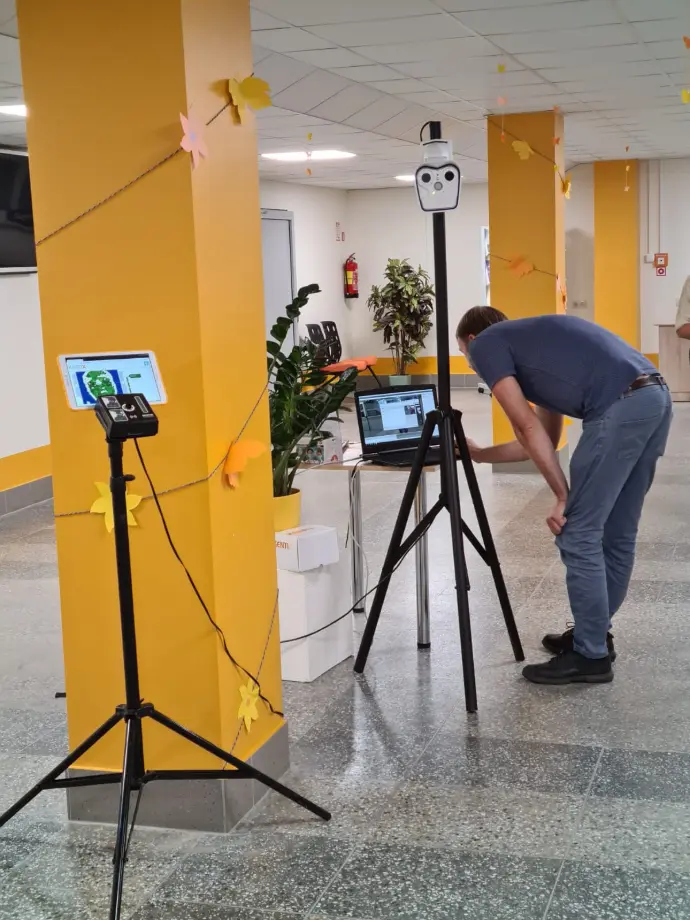
Software tools and AI can help configure devices, verify network connections, identify faults, and prepare system documentation. This does not mean that every process is already fully automated, but these tasks represent a more logical starting point than complex physical installation work.
2. Making physical work easier
A practical area for development
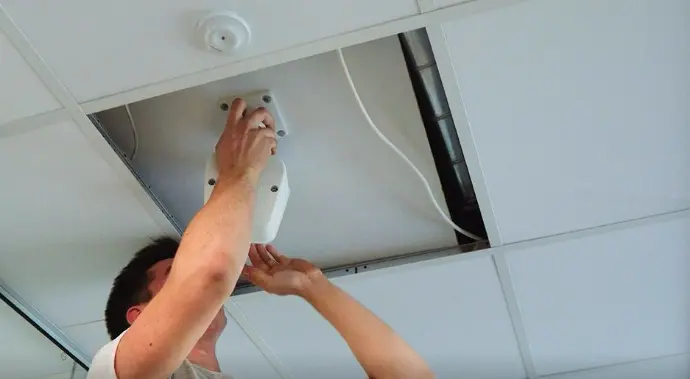
Specialised drilling equipment, mechanical cable-pulling tools, and other assistive devices can reduce physical strain and speed up repetitive tasks. These benefits can be achieved without deploying fully autonomous robots.
3. Complex integration and commissioning
Expertise will remain essential
Access control, video surveillance, intrusion detection, fire safety systems, and building management systems must be integrated, with their interactions and compliance with project requirements carefully verified.
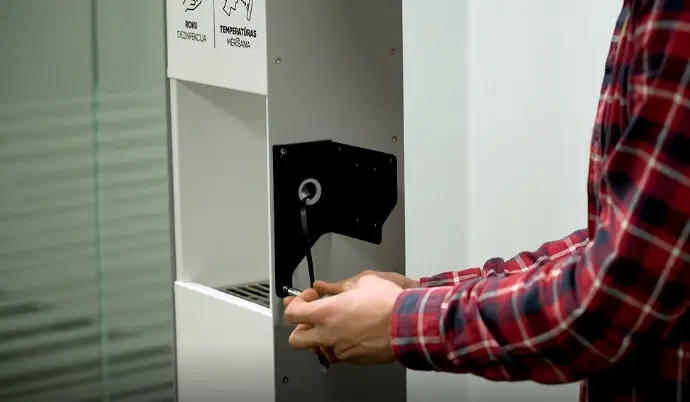
Mistakes at this stage can result not only in additional costs but also in security and safety risks.
These observations represent an assessment of possible technological developments, not a statistically validated timeline for automation adoption.
2. Why should distributors pay attention to this trend?
A security technology distributor is more than an intermediary between manufacturers and integrators. Its role includes providing technical expertise, product selection support, training, and assistance that help integrators implement solutions successfully.
The development of automation creates at least four significant opportunities.
Area | Potential impact |
|---|---|
Product portfolio | Growing demand for devices that simplify installation, remote configuration, and maintenance. |
Integrator training | Technical expertise will increasingly need to cover networking, software, cybersecurity, and systems integration in addition to physical installation. |
Technical support | Greater value will come from remote diagnostics, standardised configuration processes, and faster troubleshooting. |
Manufacturer partnerships | Product evaluation will need to consider not only functionality but also how easily devices can be installed, configured, integrated, and maintained. |
Practical recommendation: Product evaluations should already consider more than technical specifications and purchase price. Installation time, configuration complexity, the likelihood of errors, remote management capabilities, and total lifecycle costs should also be assessed.
3. The Baltic market has its own challenges
There is no reason to assume that robotic installation will be adopted in the Baltic states at the same pace as in the United States. Local conditions will play an important role.
- Market size. Purchasing a specialised robot may not be economically viable for small and medium-sized projects unless the equipment can be used efficiently across multiple sites.
- Variety of building environments. Historic buildings, renovated premises, and differing construction methods make standardised, fully autonomous installation more difficult.
- Availability of skilled technicians. Where a shortage of qualified technicians increases project lead times and costs, assistive automation tools may become economically attractive sooner.
- Regulatory requirements and accountability. The use of automation does not remove the obligation to ensure proper installation, system functionality, and accountability for the completed work.
These are factors to consider when assessing the market, not evidence that robotics will be adopted either faster or more slowly in the Baltic states.
4. What should be viewed more critically in the article?
The predictions presented in the article should be treated as industry executives' opinions rather than established deadlines for the widespread adoption of robotic installation.
It is important to distinguish between three different levels of technological development.
- Level 1: A robot performs an individual task. For example, it drills a hole or assists with cable pulling.
- Level 2: A robot works under a technician's supervision. It performs several tasks, but a human makes decisions, verifies the results, and handles non-standard situations.
- Level 3: A robot independently installs and commissions an entire system. It plans the work, adapts to site conditions, resolves faults, and ensures that the completed installation meets the relevant requirements.
These levels differ substantially in both technical complexity and economic viability. A robot capable of performing one installation task is not necessarily capable of installing a complete access control or video surveillance system.
Furthermore, the four-, five-, and seven-and-a-half-year timelines mentioned in the article are not supported by detailed cost analyses, comparative field trials, or specific metrics measuring the automation of installation tasks. They should therefore not be used as business planning assumptions without further evidence.
5. What can the industry do today?
Security technology distributors and integrators do not need to wait for fully autonomous installation robots to enter the market. They can start by implementing measurable, practical improvements:
- Measure average installation and configuration times for different types of security systems.
- Identify which tasks most frequently cause errors, repeat site visits, or project delays.
- Evaluate manufacturers' tools for remote configuration, diagnostics, and system management.
- Test assistive tools for repetitive and physically demanding tasks.
- Train technicians in network infrastructure, software, systems integration, and cybersecurity.
- Evaluate automation based on total project costs and quality, rather than labour hours saved alone.
Final assessment
The IPVM article is a useful reminder that demonstrating a technology and implementing it successfully in real-world conditions are two different things. However, the discussion should not be reduced to whether robots will replace people.
A more important question for the security industry is: How can automation help qualified professionals install more systems, work more efficiently, and make fewer mistakes without compromising security or quality?
From a distributor's perspective, a competitive advantage will belong to companies that help integrators select not only good equipment but also more efficient ways of working.
Fully autonomous installation robots may eventually become a reality, but the timeline remains uncertain. Meanwhile, tools for configuration, diagnostics, and reducing physical workloads offer a much more practical direction to explore today.
Basic article source: https://www.linkedin.com/pulse/robots-install-security-systems-within-decade-say-execs-ipvm-tczoe/