A few years ago, video surveillance, access control, alarms, and intercoms were frequently deployed as standalone systems. Each task was handled separately, which seemed logical at the time. However, in 2026, Baltic integrators are increasingly facing a different dilemma: clients have accumulated multiple platforms, various vendors, and ever-stricter cybersecurity requirements.
This is currently one of the most pressing issues in the Baltics. The challenge is not a lack of cameras, but rather system fragmentation. Operators are forced to work across multiple software programs, while IT departments must maintain several servers, distinct user permissions, and separate licenses. Meanwhile, NIS2, GDPR, and critical infrastructure regulations are making this fragmented approach harder to sustain.
The Traditional Approach is Becoming Costly
At first glance, standalone systems seem like an economical choice. In the long run, however, the reality is often quite different. A typical facility might utilize:
- A standalone VMS system
- Separate access control
- A separate alarm system
- An independent intercom system
- Multiple servers
- Different databases
- Multiple maintenance licenses
- Several service agreements
As a result, it is not just the initial investment that spikes, but also the Total Cost of Ownership (TCO). Every additional system means more workload for the IT department, extra training for operators, and a higher risk of critical information being scattered across multiple platforms during an emergency.
The Core Issue for Baltic Clients: Management, Not Video
For most facilities, video surveillance itself is no longer a hurdle. The cameras work, and the footage is clear. The real trouble starts when there is a need to unite multiple sites, integrate systems from different manufacturers, centralize user management, and handle audit trails, cybersecurity, remote administration, and future expansion. This is exactly why integrators are increasingly choosing platforms that protect the client's existing investments while centralizing security management.
Open Architecture Outweighs Camera Count
Current trends show that integrators are shifting away from single-vendor lock-in, opting instead for platforms that offer clients true freedom of choice. This is where the Genetec approach stands out.
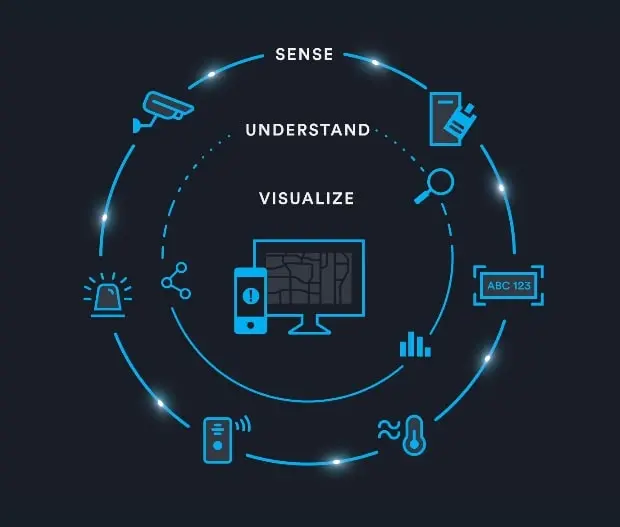
This specific platform unifies data from various manufacturers' video surveillance, access control, alarms, intercoms, sensors, and other security systems into a single operator interface. Clients do not have to rip and replace their existing infrastructure. For the integrator, this translates to lower migration risks, protected customer investments, more flexible project designs, and smoother scaling down the road. For the end user, it means lower long-term costs and greater vendor independence.
Cybersecurity as a Primary Selection Criterion
It is clear that NIS2 and mounting cybersecurity regulations have fundamentally transformed the market. Increasingly, the choice of a VMS platform is driven not just by security managers, but also by IT and cybersecurity teams. Crucial factors now include encrypted communication, centralized authentication, audit logs, user permission management, regular security patches, and incident traceability. These aspects are becoming decisive in projects for critical infrastructure, municipalities, data centers, and the public sector.
Digifort ISM:S A Daily Practice, Not a Marketing Slogan
Digifort has also significantly advanced its information security management approach in recent years. The manufacturer has implemented an ISMS (Information Security Management System) that covers everything from software development and vulnerability management to access control, incident logging, security testing, and continuous process improvement. In practice, this delivers several distinct advantages.
For Integrators:
- Clearly defined cybersecurity processes
- Predictable system maintenance
- Reduced risks in projects with stringent security requirements
For End Users:
- Higher reliability
- Easier compliance with internal security policies
- A more secure environment for the long term
Today, clients are buying more than just a video platform; they are investing in the confidence that their system will remain secure five or ten years down the line.
How Integrators Choose a VMS Platform in 2026
While camera capacity and license costs used to be the deciding factors, priorities have clearly shifted. Today, integrators evaluate:
- ✓ The ability to preserve existing infrastructure investments
- ✓ Open architecture
- ✓ Scalability
- ✓ Cybersecurity maturity
- ✓ Total Cost of Ownership (TCO)
- ✓ Compliance with NIS2 and GDPR requirements
- ✓ Simplicity of long-term maintenance
In 2026, a VMS is no longer just a video system. It has evolved into the cornerstone platform upon which clients build their future security infrastructure. Because of this, the ultimate question is no longer "How many cameras does the system support?" but rather:
" Will this platform still be the right choice five years from now?"